Insights
Research-backed thinking on how languages actually get learned.

95% vs 98% Reading Coverage: Pick Texts Without Guessing
Understand 95% and 98% known-word coverage: one unknown word in 20 vs one in 50, and how to choose texts for reading practice.

Can You Learn a Language Only by Reading?
Reading builds comprehension and vocabulary. Add narrator audio, shadowing, and retelling to turn understanding into listening and speaking practice.
Am I Too Old to Learn a Language? The Research Says No
Am I too old to learn a language? Research debunks the critical period myth. Adults have real advantages, and neuroplasticity supports lifelong language learning.
Comprehensible Input vs Grammar Study: Which Works Better?
Comprehensible input vs grammar study without false either-or claims. Compare reading/input, grammar, output, and feedback by skill, level, and goal.
Krashen's Input Hypothesis: i+1 Meaning and Examples
What Krashen's Input Hypothesis means, how i+1 works, examples of comprehensible input, and when grammar, output, and feedback help.
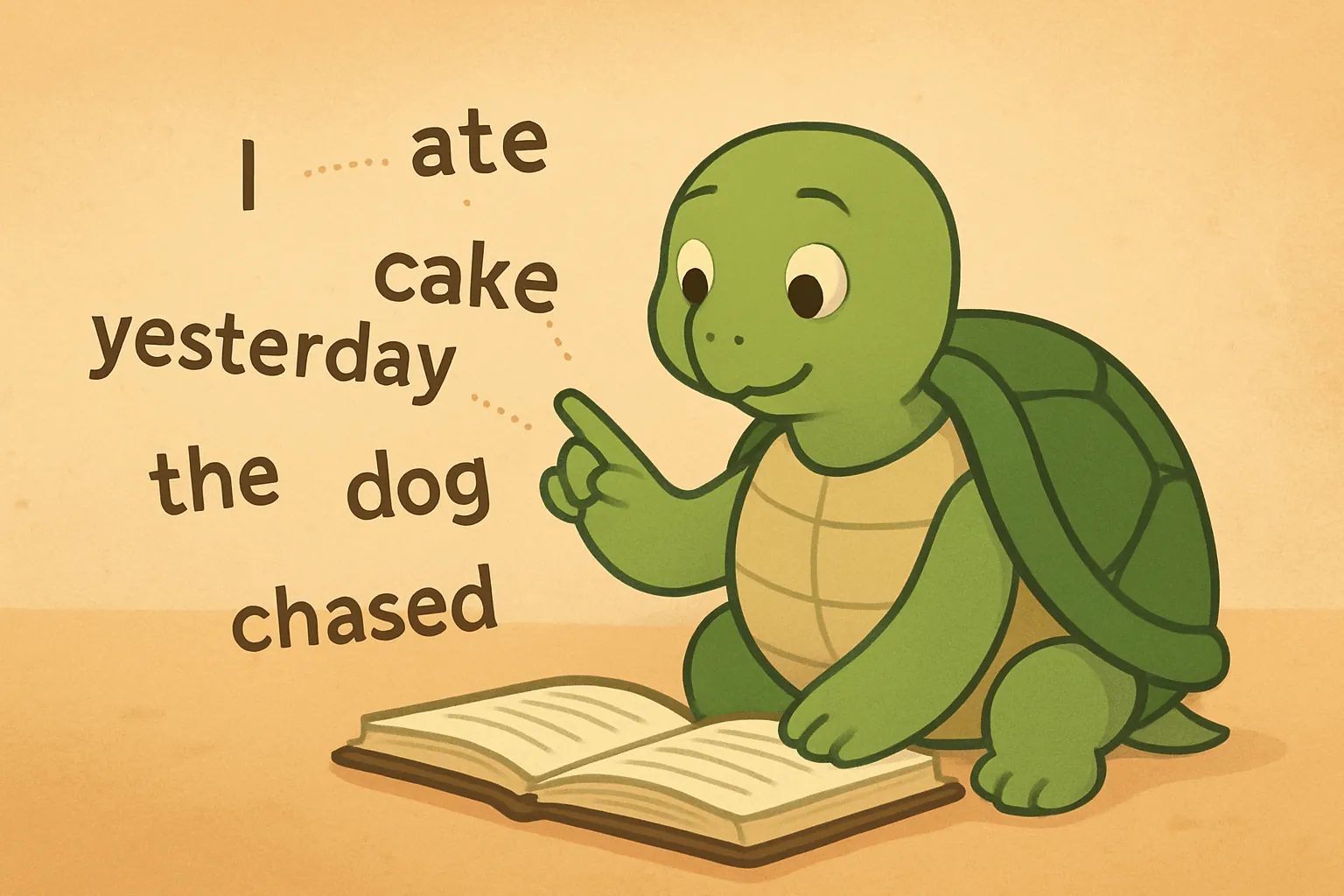
Natural Order Hypothesis: Meaning and Examples
What the Natural Order Hypothesis means, examples from English grammar, Krashen's view, acquisition order, teachability, and input.
Extensive Reading: Meaning, Examples, How to Start
Extensive reading for language learning: meaning, examples, 95-98% text difficulty, dictionary rules, and a practical weekly routine.
Spaced Repetition for Languages: Flashcards + Reading
Spaced repetition for language learning: how SRS helps vocabulary, where flashcards fall short, and how reading adds context.

Learn a Language by Reading: What Works and What Does Not
A practical, evidence-aware guide to learning a language through reading: text difficulty, 95–98% coverage, vocabulary growth, and what reading cannot replace.


TortoLingua app
Read in the browser or install the mobile app.
The app page links to the web app, the official iOS App Store listing, and Google Play for Android.